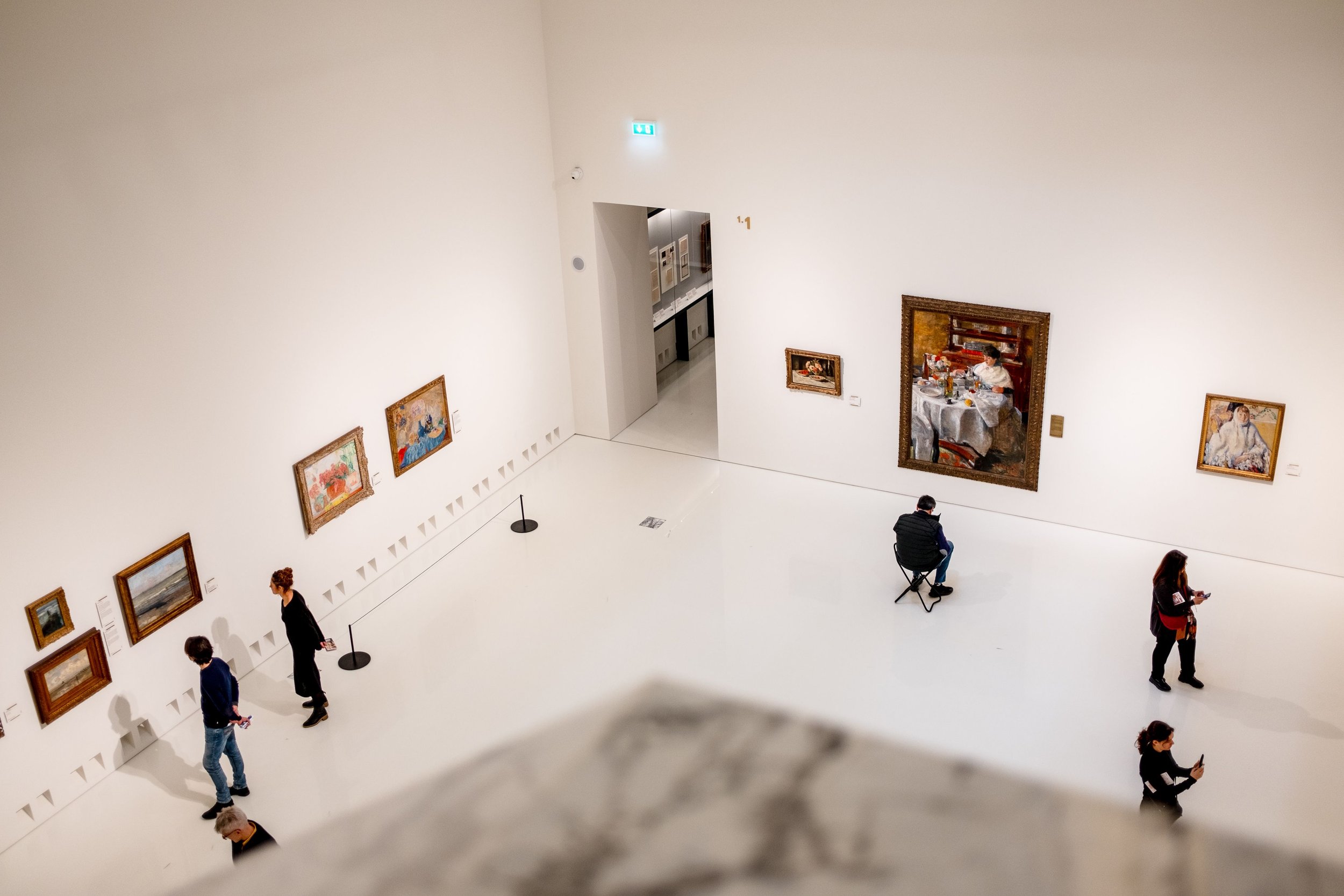
This past weekend, I was fortunate enough to be in Sydney to visit the Art Gallery of New South Wales and see the winners as well as the finalists of the Young Archie 2026 competition. There were so many beautiful and moving works, but one in particular stayed with me. It resonated for many reasons, most likely because of both my work as a therapist and my own experience as an immigrant: it is an exploration of ambiguous grief.
The piece, painted by a 13-year-old, is a watercolor portrait of the artist’s grandma. In the image, she sits looking nostalgically out of the window of what appears to be a landscape somewhere outside of Australia. In the caption, the young artist explains that the painting is an ode to their family’s legacy and their Grandma’s love for her roots. They write about her longing for home and the profound sense of leaving a part of her identity behind when she migrated.
I have no doubt that this artist’s Grandma couldn’t be prouder of them or more grateful to have them in their life. Yet, even two generations later, her grand child is clearly witnessing, and deeply moved by, their grandma’s “ache for missing home.” It is a longing that has transcended generations, leaving its imprint not only on the person who migrated, but also on those who love her.
Ambiguous grief is a reality for many—if not all—of us immigrants. It’s grief without an ending, or ritual to mark it. Instead, it is continous. It can show up as chronic sadness and even anxiety, always present at some level, lurking in the background.
It’s a grief for who we would have been if we could’ve and/or decided to stay, a grief for relationships that gradually became long distance, a grief for a place we are from that has moved on without us, for who we were in that place, a grief for not completely fitting in there anymore but also not completely fitting in here, either.
We now exist in a third space. The good news is you are not alone. You are part of a vast community of people that navigate this third space too.
You can grieve the life you left behind and also be proud of what you’ve built in the place where you are now. They are not mutually exclusive—you can and must do both. Doing so will intentially help you shape this third space and live more comfortably in it.
There is no quick fix for ambiguous grief. But naming it, recognizing it, and honoring it can be profoundly healing. While this grief may never disappear entirely, it often softens and changes over time, especially when you have the support to process it.
This brings me back to the young artist’s work that I encountered this past weekend. There is great beauty that can emerge out of ambiguous grief—and I’m quite sure the artist’s Grandma caught a glimpse of this when she saw her grandchild’s gorgeous portrait.